
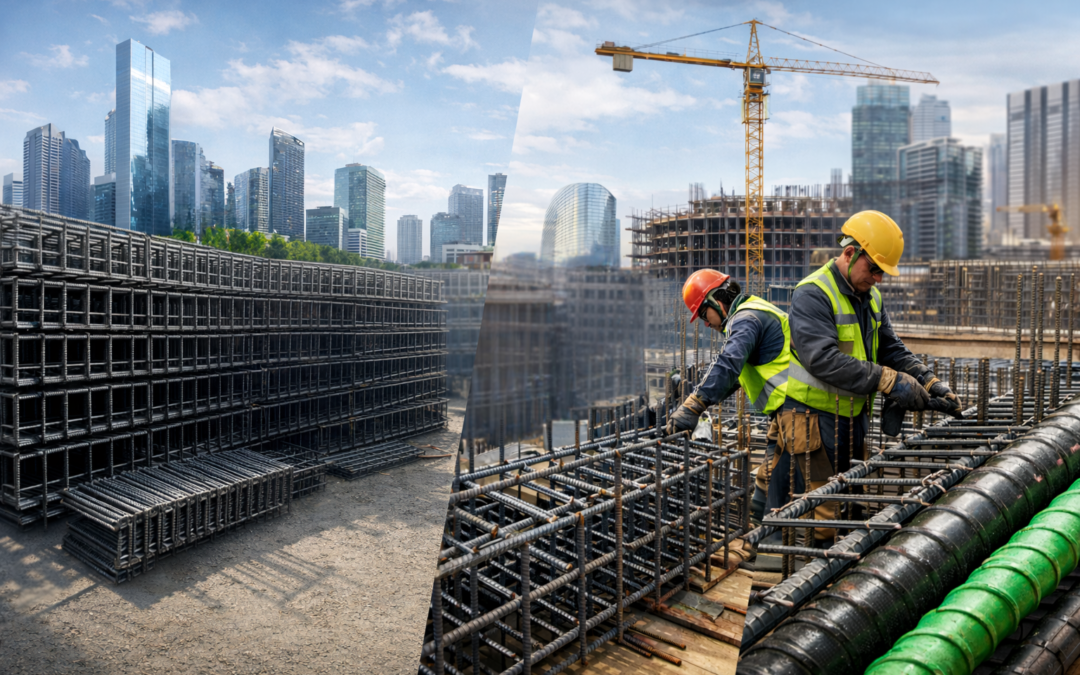
Construction has always been about strength, precision and longevity. But in today’s fast-moving world, it is also about efficiency, sustainability and smart engineering. Behind the scenes of every modern structure lies a quiet revolution. Innovation in reinforcing steel technologies. While rebar may appear unchanged to the untrained eye, the processes, systems and engineering behind it have evolved dramatically.
From advanced manufacturing techniques to prefabricated reinforcement systems and improved quality control, innovation in rebar technology is reshaping how we design and build. Companies committed to progress, such as Marsa Rebar, are embracing these advancements to deliver stronger, safer and more efficient solutions for today’s construction demands.
In this article, we explore how innovation is transforming reinforcing steel and why it matters more than ever.
Smarter Manufacturing Processes
Traditional reinforcing steel production relied heavily on manual processes and basic forming methods. Today, automation, digital precision and advanced machinery ensure higher accuracy and consistency than ever before.
Modern cut-and-bend rebar services now use computer-controlled machinery capable of producing reinforcement to exact structural specifications. This reduces human error, minimises waste and ensures bars are formed precisely according to engineering drawings.
Precision manufacturing means:
- Accurate bar diameters and lengths
- Perfectly controlled bending angles
- Reduced on-site adjustments
- Faster installation and improved safety
By integrating advanced production systems into their operations, suppliers such as reinforcing steel specialists help contractors improve workflow efficiency while maintaining structural integrity.
Prefabrication and Reinforcement Systems
One of the most significant innovations in modern rebar technology is the shift towards prefabricated reinforcement systems. Instead of assembling reinforcement piece by piece on site, many projects now utilise ready-made steel mesh, reinforcement cages and engineered systems.
Products such as steel mesh reinforcement streamline construction by:
- Reducing labour requirements
- Ensuring consistent spacing and alignment
- Improving quality control
- Accelerating project timelines
Prefabricated solutions not only enhance productivity but also improve structural performance by guaranteeing uniform reinforcement placement. In large-scale developments, this innovation translates into measurable cost savings and higher build quality.
Enhanced Strength and Performance
Innovation in metallurgy and production techniques has significantly improved the mechanical properties of reinforcing steel. Modern rebar offers enhanced tensile strength, improved ductility and better performance under dynamic loads.
High-quality reinforcing steel products are engineered to withstand heavy loads, seismic activity and environmental stress. This makes them suitable for demanding applications including:
- High-rise buildings
- Commercial developments
- Infrastructure projects
- Industrial structures
By investing in advanced manufacturing processes and strict quality control systems, forward-thinking suppliers ensure that today’s reinforcement meets the structural challenges of modern architecture.
Digital Integration and Precision Planning
Technology has not only changed how rebar is produced. It has transformed how it is designed and implemented.
Building Information Modelling (BIM) and digital structural design tools allow engineers to model reinforcement layouts with remarkable precision. This enables:
- Accurate quantity estimation
- Reduced material waste
- Improved clash detection
- Seamless coordination between trades
When digital planning is combined with advanced fabrication services from trusted providers like Marsa Rebar, the result is a smoother construction process with fewer delays and higher accuracy.
Innovation in digital integration ensures that reinforcement arrives on site ready for installation, aligned perfectly with structural requirements.
Improved Durability and Corrosion Resistance
Modern construction increasingly demands durability, particularly in coastal or high-humidity environments. Innovation in rebar technologies has introduced enhanced solutions designed to resist corrosion and extend structural lifespan.
While traditional carbon steel remains widely used, improvements in surface treatment, storage practices and manufacturing controls significantly reduce the risk of premature deterioration.
Quality-driven suppliers ensure that their reinforcing steel solutions are produced and handled under controlled conditions, preserving performance from factory to site. When combined with proper concrete cover and installation practices, modern reinforcement delivers exceptional longevity.
Sustainability and Material Efficiency
Innovation in rebar technology also supports more sustainable construction practices. Efficient manufacturing processes reduce material waste and energy consumption. Precision cutting and bending minimise offcuts, contributing to more environmentally responsible building.
Additionally, optimised reinforcement design ensures that structures use only the steel required for performance — avoiding over-specification and unnecessary material use.
By embracing efficient production and distribution systems, suppliers such as rebar and reinforcement experts contribute to greener construction while maintaining uncompromising strength and reliability.
Quality Control Through Advanced Testing
Modern reinforcing steel production benefits from improved testing and inspection technologies. Automated quality checks, tensile testing equipment and dimensional verification systems ensure every batch meets strict standards.
Innovation in quality management enhances:
- Traceability of materials
- Compliance with European standards
- Consistency across projects
- Confidence for engineers and developers
This commitment to precision and accountability strengthens the entire construction supply chain.
The Future of Rebar Technology
Looking ahead, innovation in reinforcing steel will continue to evolve. Integration with smart construction systems, improved prefabrication techniques and further advancements in steel engineering will shape the next generation of structures.
As construction projects grow more complex and sustainability targets become stricter, modern rebar technologies will play an even more critical role in delivering efficient, resilient and future-proof buildings.
Suppliers committed to innovation — such as Marsa Rebar — remain at the forefront of this transformation, ensuring that reinforcing steel continues to meet the ever-increasing demands of contemporary construction.
Conclusion: Building Stronger Through Innovation
Reinforcing steel may be hidden within concrete, but the innovation behind it is highly visible in the strength and performance of modern structures. From automated manufacturing and prefabrication to digital design integration and enhanced durability, rebar technology has advanced far beyond traditional methods.
For contractors, engineers and developers, embracing innovative reinforcement solutions means safer builds, improved efficiency and long-term reliability. In a world where construction standards continue to rise, modern rebar technologies provide the solid foundation upon which progress is built.
How has innovation improved reinforcing steel production?
Innovation has significantly enhanced reinforcing steel production through automated cutting and bending systems, advanced quality control testing, and digital precision manufacturing. Modern fabrication ensures greater accuracy, reduced material waste, and consistent compliance with European standards. Suppliers such as Marsa Rebar use advanced machinery and process controls to deliver high-quality reinforcement solutions tailored to modern construction demands.
What are the benefits of prefabricated rebar systems in construction?
Prefabricated systems such as steel mesh reinforcement and engineered reinforcement cages reduce on-site labour, improve installation speed, and ensure consistent spacing and structural accuracy. These systems enhance efficiency while maintaining strength and reliability. By sourcing professional reinforcement products, contractors can improve project timelines without compromising structural integrity.
Does modern rebar technology improve structural durability?
Yes. Advances in metallurgy, production techniques, and quality control have improved tensile strength, ductility and resistance to environmental stress. Modern reinforcing steel is designed to perform under heavy loads and in demanding environments, helping structures achieve greater longevity and safety when installed correctly.
How does digital technology support modern reinforcement solutions?
Digital tools such as Building Information Modelling (BIM) allow engineers to design reinforcement layouts with exceptional precision. When combined with professional cut-and-bend rebar services, this ensures reinforcement arrives on site accurately fabricated and ready for installation. This integration reduces errors, improves coordination, and enhances overall construction efficiency.
Why is it important to choose an innovative reinforcing steel supplier?
Choosing a supplier committed to innovation ensures access to high-quality reinforcing steel products, advanced fabrication techniques, strict quality control systems, and reliable delivery. Working with experienced providers like Marsa Rebar helps contractors and developers maintain compliance, improve efficiency, and achieve long-lasting structural performance.